Historic Sites
Stratfield Saye House
The country seat given by a grateful nation to the 1st Duke of Wellington after Waterloo — still the family home, and stuffed with Napoleonic trophies.
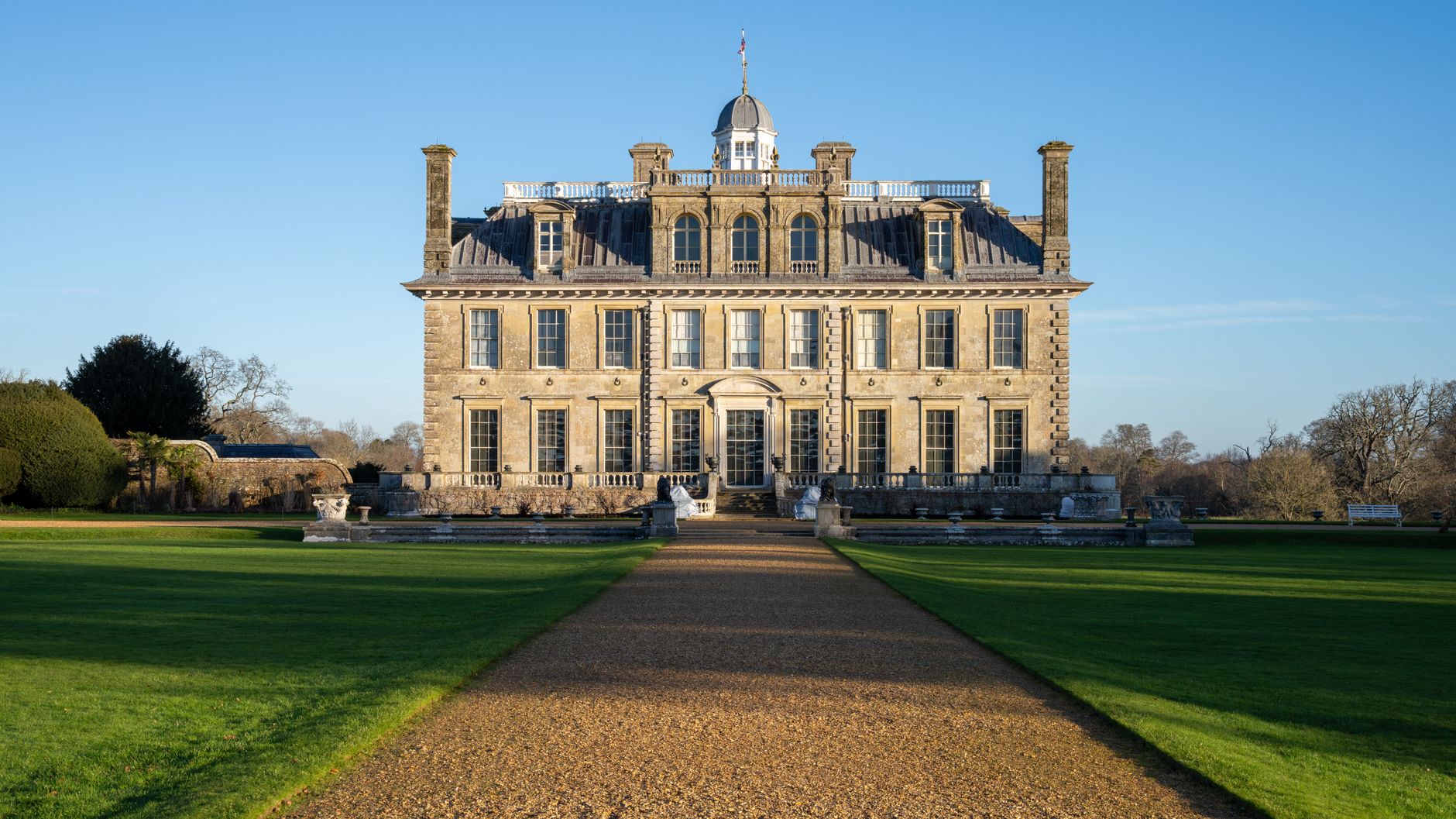
In 1817 Parliament voted the 1st Duke of Wellington £600,000 to buy an estate as a national reward for defeating Napoleon. He chose Stratfield Saye, a Carolean red-brick house on the Hampshire-Berkshire border, and intended to demolish it and build a Waterloo Palace instead — but the funds ran out and he stayed, improving the existing house instead. It has been the Wellington family home ever since. Every room holds trophies: the Duke's actual funeral carriage (18 tons of melted-down French cannon), Napoleon's captured library from St Helena, and the grave of Copenhagen, his warhorse at Waterloo, in the paddock.
You visit only by guided tour (about 75 minutes) on published open days. The route covers the Entrance Hall with its tessellated Roman pavement from Silchester, the Gallery hung with the Spanish and Portuguese royal portraits given to Wellington after the Peninsular War, the Library with 3,000 books captured from Napoleon's household, the Music Room with the funeral carriage on display, and the Lady Charles Room in the private wing. Outside, the grounds include the American Garden, Wellington's kitchen garden and, in the far paddock, the grave and simple headstone of Copenhagen.
This is one of the shortest opening seasons of any major English country house — essentially two weeks at Easter and six weeks in July and August. Book online at least a fortnight ahead. It is 40 minutes' drive south of Reading via the A33; there is no useful public transport. Combine with the Roman town of Silchester (five miles east, English Heritage, free) for a full day of history. The tea room does a plain but decent lunch. No photography inside the house.
What the tour is really selling is a lived-in house rather than a museum, and the guides make that the theme. The 1st Duke was a compulsive improver: he put in central heating, gas lighting and water closets long before his neighbours, and the guides will point out the ducts and radiators as readily as the Napoleonic silver. The corridors are hung floor to ceiling with prints the Duke collected himself, the Gallery portraits are the ones Ferdinand VII of Spain sent him after the Peninsular campaign, and the Library still smells of old paper. Because the present family occupies the far wing, some doors stay shut and the route is fixed — you do not wander. Accept that, ask questions instead, and the 75 minutes go quickly. Then walk out to the paddock on your own time, which is the unhurried half of the visit.
The drive is the only sensible way in. From central Reading pick up the A33 southbound past Green Park, then run through Three Mile Cross, Spencers Wood, Riseley and Stratfield Turgis; the estate entrance is signed off the A33 near the Wellington Arms, and a long private drive brings you to free parking by the stable block. Allow 40 minutes, more if the A33 is queuing back from Junction 11 of the M4 on a summer afternoon. Mortimer station is 12 minutes from Reading on the Great Western line towards Basingstoke and costs under £10 for an off-peak return, but it sits four miles away down lanes with no footway and no taxi rank, so you would have to pre-book a cab in both directions. A taxi the whole way from Reading is roughly £30 each leg. Take the car.
Costs are simple and there is no membership that gets you in cheaper: the house is privately owned, so National Trust and English Heritage cards are worthless here. It is £16 an adult, £8 a child and £8 for a gardens-only pass, cash or card, which puts a family of four at about £48 before lunch. Parking is free and unlimited. The tea room runs to soup, sandwiches, a hot dish and cake for roughly £8-£12 a head, and the small shop sells a guidebook worth buying because you cannot photograph anything indoors. The gardens-only ticket still gets you the American Garden, the kitchen garden and Copenhagen's grave, so it is a fair fallback if the tours are sold out — but at half the price for well under half the experience, buy the full ticket if any slot remains.
Timing matters more here than at most houses because the gates are locked for ten months of the year. The season is roughly two weeks over Easter plus 1 July to 31 August, Sundays to Thursdays only; Fridays and Saturdays are shut. The first tour of the day, at 11:30, is consistently the smallest group and the quietest for the paddock walk afterwards; the mid-afternoon slots in the last fortnight of August fill first and go to waiting lists. Rain is survivable indoors but ruins the better half of the day, since the walk to Copenhagen's grave crosses open grass that turns claggy — bring boots rather than trainers if the week has been wet. July gives you the kitchen garden at its fullest. Book a fortnight out, take the 11:30, and keep the afternoon free for Silchester.
It suits anyone who reads military history, and it is one of the few places in southern England where a Waterloo obsession is actually rewarded with objects rather than interpretation boards. Teenagers doing the Napoleonic Wars at GCSE or A-level get more from the 75 minutes than they will from a term of textbook. Under-eights will struggle: it is a standing, listening tour with nothing to touch and no photography, and there is no playground. Wheelchair users should telephone before booking — the drive and garden paths are gravel, the Library is on the first floor and the route uses stairs, so the gardens-only ticket may be the realistic option. Nobody with a train to catch in an hour should attempt it: there are no drop-ins, no walk-up guarantee, and the round trip from Reading alone is 80 minutes of driving.
Build the rest of the day around Silchester, 15 minutes east, where the mile-and-a-half circuit of Roman walls at Calleva Atrebatum, the amphitheatre outside the north-east gate and St Mary's church inside the ramparts are all free and open in daylight; the volunteer-run Calleva Museum in the village is tiny and also free. The Vyne, the National Trust's Tudor house at Sherborne St John, is about 20 minutes south-west and makes a fuller second stop if you want indoor time. Families who find the tour too static should swap it for Wellington Country Park at Riseley, three miles north on the same estate, which charges separately and has the lake, deer and play areas that Stratfield Saye deliberately does not. For lunch, the Wellington Arms on the A33 at Stratfield Turgis is the nearest pub to the gates.
The honest warnings: this is not Blenheim, and people who arrive expecting the Waterloo Palace that was never built come away thinking the house small. It is a comfortable, low-ceilinged squire's house that happens to contain extraordinary things, and the pleasure is in the objects and the guide, not in scale or state rooms. The funeral carriage is genuinely enormous and the room housing it is not, so you see it in pieces rather than as a whole. Copenhagen's grave is a 400m trudge across a paddock to a modest headstone under a tree — moving if you know the story, anticlimactic if you do not. The tea room is plain and there is no shop worth browsing. And the single most common mistake is driving down in September, when the gate is simply shut until Easter.
Hours & entry
Not free
Sun-Thu 11:30-16:00 (Easter, July, August) · Guided tours only, on the hour · Closed rest of year
What to see
{'what': "The 1st Duke's funeral carriage cast from French cannon", 'where': 'The Music Room, off the main gallery'}
{'what': "Napoleon's captured library from St Helena", 'where': 'The Library, first floor'}
{'what': "The grave of Copenhagen, Wellington's Waterloo horse", 'where': 'The far paddock, 400m northwest of the house'}
Tips from the ground
Tours limited to 25 — book online, not by phone, for the guaranteed slot.
Combine with Silchester Roman walls (5 miles east, English Heritage, free) for a full history day.
No inside photography, so bring a notebook; the library titles alone are worth writing down.
Questions, answered
Ticket price?
£16 adult, £8 child, gardens-only £8. Cash or card. A family of four therefore pays about £48 before anything else, and parking on the estate is free and unlimited. There is no National Trust or English Heritage reciprocity because the house is privately owned and the tours are staffed by the estate. Lunch in the tea room adds roughly £8-£12 a head, and the guidebook in the small shop is worth its cover price given that photography indoors is banned.
Free entry?
None. Privately owned, tour only. There are no free days, no evening openings and no membership scheme that waives the charge, so the cheapest way through the gate is the £8 gardens-only pass, which still covers the American Garden, the kitchen garden and the walk to Copenhagen's grave. If you want free history in the same half-day, drive five miles east to Silchester, where the Roman walls, the amphitheatre and the little Calleva Museum in the village all cost nothing and are open in daylight hours.
How long is the visit?
2-3 hours: 75-min tour, then gardens and horse's grave. Arrive 15 minutes before your slot to park and walk up from the stable block, allow about 20 minutes for the 400m each way across the paddock to Copenhagen, and another half hour if you eat in the tea room. With the 40-minute drive from Reading in each direction it is a comfortable half day; add the Roman walls at Silchester and it becomes a full one, which is how most people should plan it.
When is it open?
Two weeks over Easter and roughly 1 July to 31 August, Sun-Thu only. Closed the rest of the year. Fridays and Saturdays are shut throughout the season, and the whole estate closes from September until the following Easter, which catches out a steady trickle of people who drive down on an autumn weekend. Published hours are 11:30 to 16:00 with tours leaving on the hour; the 11:30 departure is reliably the smallest group. Always check the estate's current dates before setting off, as the season shifts with Easter.
Booking required?
Yes — online timed tour tickets. Walk-ups only if there is space. Groups are capped at 25 people, so a summer Sunday can sell out entirely; book at least a fortnight ahead, and further for the last two weeks of August, which go first. Book online rather than by telephone, because only the web system holds a guaranteed slot. If every tour has gone, the £8 gardens-only ticket is usually still available on the day and gets you the grounds, the American Garden and Copenhagen's grave.
Getting there from Reading?
40-min drive via A33 south. No practical public transport; nearest station Mortimer is 4 miles away with no taxi rank. The route runs through Three Mile Cross, Spencers Wood, Riseley and Stratfield Turgis, with the estate entrance signed off the A33 near the Wellington Arms and free parking by the stables. Mortimer is 12 minutes from Reading for under £10 off-peak return, but the lanes onward have no footway, so you would need a pre-booked cab both ways. A taxi from Reading is about £30 each leg.
Doing good is the business: every booking through Stay Reading funds one verified tonne of carbon removal — same room, same price, no markup.
Start your search