Historic Sites
Reading Abbey Ruins
The 12th-century royal abbey where King Henry I is buried — Reading's founding monument, restored and reopened for free walk-through.
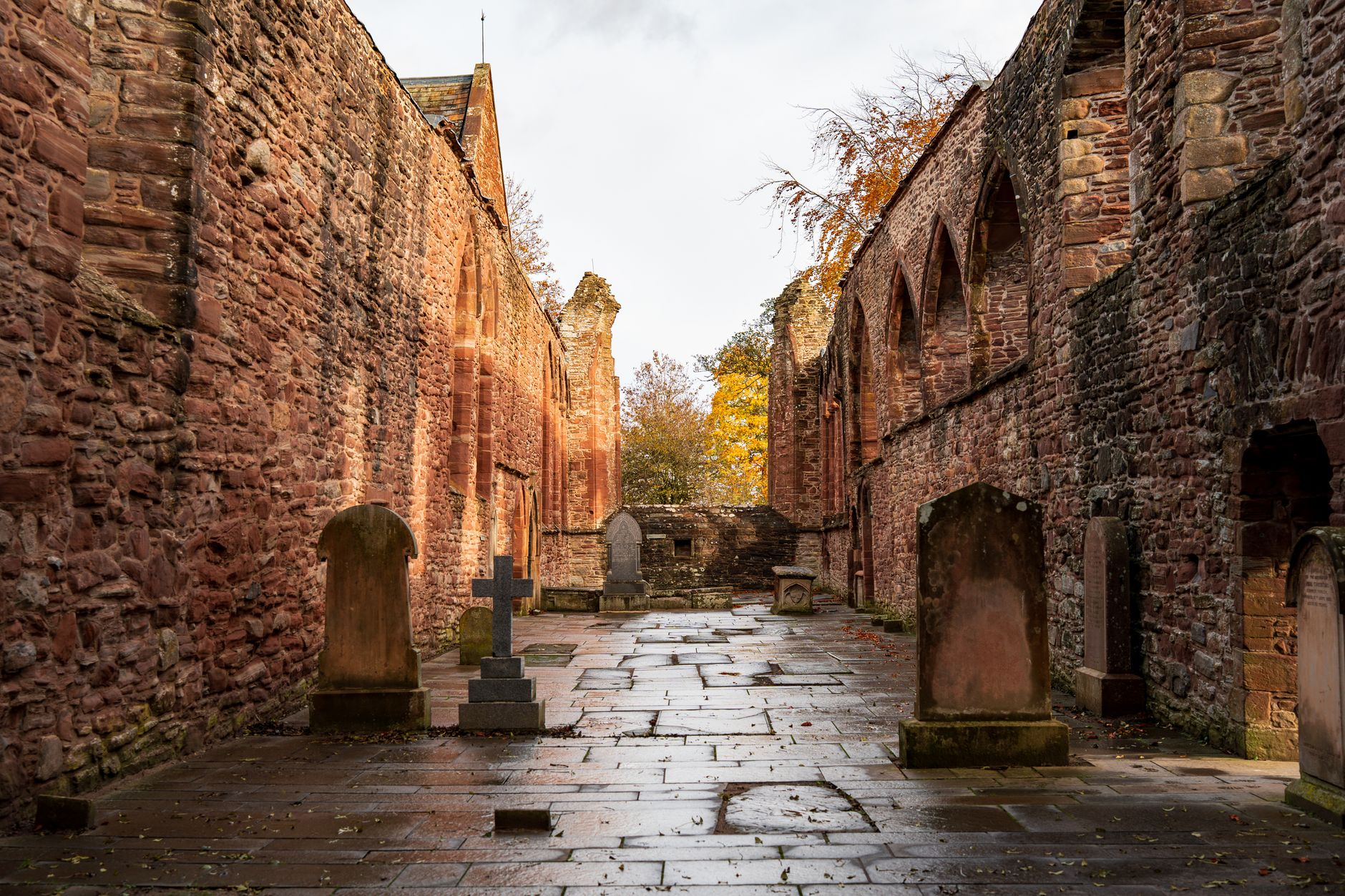
Reading Abbey was founded in 1121 by King Henry I, who chose the site between the Thames and Kennet for one of the wealthiest Cluniac monasteries in medieval England. Henry himself was buried in front of the high altar in 1136, and for four centuries the abbey was a royal court, parliament venue and pilgrimage draw. Dissolved by Henry VIII in 1539, its Reigate stone was stripped for building projects and only the flint rubble cores were left standing. A £3.15 million conservation project reopened the ruins to the public in 2018, and today it is the single most important heritage site in the town — the reason Reading exists at all.
You enter through Forbury Gardens beside the Maiwand Lion and follow interpretation panels through the chapter house, dormitory range and south transept. The chapter house is the most complete space — a soaring flint-walled room where the Magna Carta was recited in 1264 and where the earliest surviving English song, Sumer Is Icumen In, was written down around 1240. The Abbey Gateway, restored separately, houses occasional exhibitions, and the parish church of St James (Pugin, 1840) sits inside the old cloister footprint. Free-standing sculptures mark the likely burial spot of Henry I in the car park behind.
Come on a bright weekday morning when the low sun rakes the flint and the gardens are quiet. The Saturday 11:00 guided tour from the Abbey Gateway is excellent value and lasts about 75 minutes. Combine with the Reading Museum five minutes away (they hold most of the abbey's excavated stonework) and lunch at one of the cafes on King Street. If you are basing yourself at a Reading Town Centre hotel like the Malmaison or Pentahotel, the ruins are a five-minute stroll — the easiest cultural landmark in the town to reach on foot.
The walk from Reading Station is the only arrival worth planning for. Leave by the south exit, cross to Station Road, turn left along Friar Street past the Town Hall on Blagrave Street, then continue onto Forbury Road and into Forbury Gardens — eight minutes on flat pavement, with the Maiwand Lion visible as your marker. Almost every Reading Buses route, including the frequent purple 17, stops on Friar Street or Kings Road within four minutes of the gates, and a contactless single stays under £3 thanks to the national fare cap. Drivers get no dedicated car park: use the Queens Road, Garrard Street or Chatham Street multi-storeys, or the Oracle decks, all six to twelve minutes away and all charged by the hour. Cyclists have it best — the Kennet towpath, National Cycle Route 4, runs along the abbey's southern boundary. Come by train and walk; driving into the Kings Road one-way system is the slowest way in.
Nothing here has a price on it. There is no ticket office, no turnstile, no audio guide to hire and no gift shop inside the ruins, because the 2018 restoration was grant-funded rather than commercially driven. The Saturday volunteer tour is free, donations optional. Reading Museum, which displays the carved capitals, floor tiles and pottery lifted from this ground, is also free and asks only for a contribution at the door. Realistically your entire outlay is parking, if you drive, and something to eat: a flat white at Workhouse Coffee on King Street runs to a few pounds, a sit-down lunch in The Oracle to £12-£18 a head. Two people can do the ruins, the museum and coffee for under £10 total on foot. Spend the money you saved on the Reading Museum guidebook rather than a paid walking tour of the town centre — the abbey material in it is better.
Timing matters more than season. The gates open at 8:00 year-round and you will have the chapter house entirely to yourself before 9:30 on a weekday, which is also when the raking light hits the flint best. In summer the site stays open to 19:00 and the last hour is the quietest and warmest of the day; in winter it locks at 16:30, so a December visit needs to start by 15:00 if you want to read the panels without a torch. Forbury Gardens fills with office lunches between 12:00 and 14:00 from May to September. April to June and September are the pick; November to January the paths puddle, the rubble reads as grey mush and the recesses go dark early. Avoid the late-August Reading Festival weekend entirely, when town-centre hotel rates spike and the streets north of the ruins are chaos.
The main circuit is step-free from Forbury Gardens on tarmac and compacted paths, so wheelchairs and buggies manage it comfortably; the Abbey Gateway's upper chamber, when open for a tour, is reached by stairs only. Children under eight get about twenty minutes out of low walls before they want the Forbury Gardens playground and the lion, which is fine — both are inside the same gate. Teenagers do better than expected once you hand them three hooks: Magna Carta proclaimed here, the oldest song in English written here, and Oscar Wilde's prison wall two minutes away. On a wet afternoon skip it: there is no roof anywhere on site and no shelter beyond the trees, so switch to Reading Museum instead. With a one-hour gap before a train it works perfectly — eight minutes each way and thirty minutes among the walls.
Fold it into a half-day easily. Reading Museum in the Town Hall on Blagrave Street is five minutes away, free, open Tuesday to Saturday, and holds both the abbey stonework and the full-size Victorian replica of the Bayeux Tapestry — the strongest indoor pairing in town. St James's Church sits one minute from the chapter house, its font reputedly cut from abbey stone; the blank brick wall of the former Reading Gaol, where Wilde served from 1895, is two minutes east. Reading Minster of St Mary the Virgin on St Mary's Butts, twelve minutes west, was partly rebuilt with stone robbed from this site after 1539, which makes the two visits read as one story. The Kennet towpath takes you from the abbey's south side down to Blake's Lock in ten minutes. Ruins at 10:00, museum at 11:15, lunch on King Street, towpath after — that is the day.
Be clear about what survives. This is not Fountains or Rievaulx: there are no standing arches, no tracery, no cloister vault, because every dressed facing stone was carted off for Windsor and for local churches, leaving flint and mortar cores that need the panels to make sense. Henry I's grave is a marker beside a car park, not a tomb — no coffin, no effigy, no confirmed location despite the ground-penetrating radar surveys of the 2010s, and visitors who arrive expecting a Richard III moment leave flat. The Sumer Is Icumen In manuscript itself is in the British Library, not here. The Abbey Gateway is locked outside scheduled tours, traffic noise from the inner ring road carries, and there are no toilets, café or visitor centre on site — plan on Reading Museum or The Oracle for both. Come for the story and the atmosphere, not for architecture.
Hours & entry
Always free — grounds open daily
Daily 8:00-19:00 (summer) · Daily 8:00-16:30 (winter) · Abbey Gateway tours Sat 11:00
What to see
{'what': 'Chapter house walls where Magna Carta was proclaimed', 'where': 'East range, accessed from the central abbey path'}
{'what': 'Marker for the burial site of King Henry I', 'where': "Car park behind St James's Church, north of the ruins"}
{'what': 'Abbey Gateway with its vaulted stone ceiling', 'where': 'Northwest corner, facing Forbury Road'}
Tips from the ground
Enter from Forbury Gardens rather than the Chestnut Walk side — the interpretation trail reads in the right order.
Free volunteer-led tours run Saturdays at 11:00 from the Abbey Gateway, no booking needed.
Bring a torch in winter — the chapter house recesses are dim after 15:00.
Questions, answered
How much does it cost to visit Reading Abbey Ruins?
Nothing. The ruins and gardens are free to enter at all times. There is no ticket office, no turnstile and no audio guide to rent, and the Saturday volunteer tour is free too, with donations welcome rather than expected. The £3.15 million restoration was grant-funded, so no admission charge is planned. Your only spend is parking — hourly rates in the Queens Road, Garrard Street or Chatham Street multi-storeys — and food, from a few pounds for coffee on King Street to £12-£18 for lunch in The Oracle.
When is the free-entry window?
Always free — no ticket, no time slot. Grounds open daily from 8:00. Closing is 19:00 in summer and 16:30 in winter, and the gates are locked rather than staffed, so do not turn up at 16:25 in January expecting time to read the panels. The best free window is 8:00-9:30 on a weekday, when the chapter house is empty and the low sun picks out the flint. Between 12:00 and 14:00 in summer the neighbouring Forbury Gardens fill with office lunches.
How long do I need for a visit?
Allow 60-90 minutes to read every panel and walk the full circuit; 30 minutes if you just want the chapter house and gateway. The Saturday 11:00 guided tour runs about 75 minutes on its own. Add roughly 45 minutes for Reading Museum five minutes away, which holds the excavated capitals, tiles and pottery, and you have a comfortable two-and-a-half-hour half-day. With only an hour before a train it still works: eight minutes each way to the station and half an hour inside.
Are there any closed days?
The outdoor ruins are open every day. The Abbey Gateway interior opens only for scheduled tours and events. Winter closing at 16:30 effectively removes the late afternoon from November to February, and the site can shut at short notice in high winds because of the exposed masonry. Volunteer tours may pause over the Christmas and New Year period, so check Reading Museum's listings before relying on one. Reading Museum itself is open Tuesday to Saturday, which matters if you are planning the two together on a Sunday or Monday.
Do I need to book?
No booking for the ruins. Saturday guided tours are drop-in and free. Arrive at the Abbey Gateway by about 10:50 if you want to hear the guide properly, as numbers are capped by how far a voice carries outdoors. Groups of ten or more should contact Reading Museum in advance rather than joining a public tour. There is no app or audio guide to download; the on-site interpretation panels and the museum's Abbey Quarter trail cover the ground perfectly well on their own.
What is the nearest station?
Reading Station, an 8-minute walk via Friar Street and Forbury Gardens. Leave by the south exit, go along Station Road, turn left onto Friar Street past the Town Hall, then continue to Forbury Road — flat pavement all the way. Reading is served by GWR, the Elizabeth line, CrossCountry and South Western Railway, so it is reachable from Paddington in 25-30 minutes on a fast train. Almost every Reading Buses route stops on Friar Street or Kings Road, four minutes from the gates, for under £3 single.
Doing good is the business: every booking through Stay Reading funds one verified tonne of carbon removal — same room, same price, no markup.
Start your search