Historic Sites
Greys Court
A layered Chiltern manor of medieval towers, Tudor brickwork and celebrated walled gardens, held by the National Trust since 1969.
Greys Court began as a fortified manor of the de Grey family, licensed to crenellate in 1347, and three of its original medieval towers still stand around the courtyard. The main house is a 16th-century Tudor rebuild by the Knollys family (Elizabeth I's cousins), with Georgian and 19th-century additions. It was the last home of Sir Felix and Lady Brunner, campaigners for peace and civic causes; Lady Brunner planted much of the current garden and gave the estate to the National Trust in 1969. The interiors are unshowy and personal — very much a 20th-century family home laid over 700 years of stone.
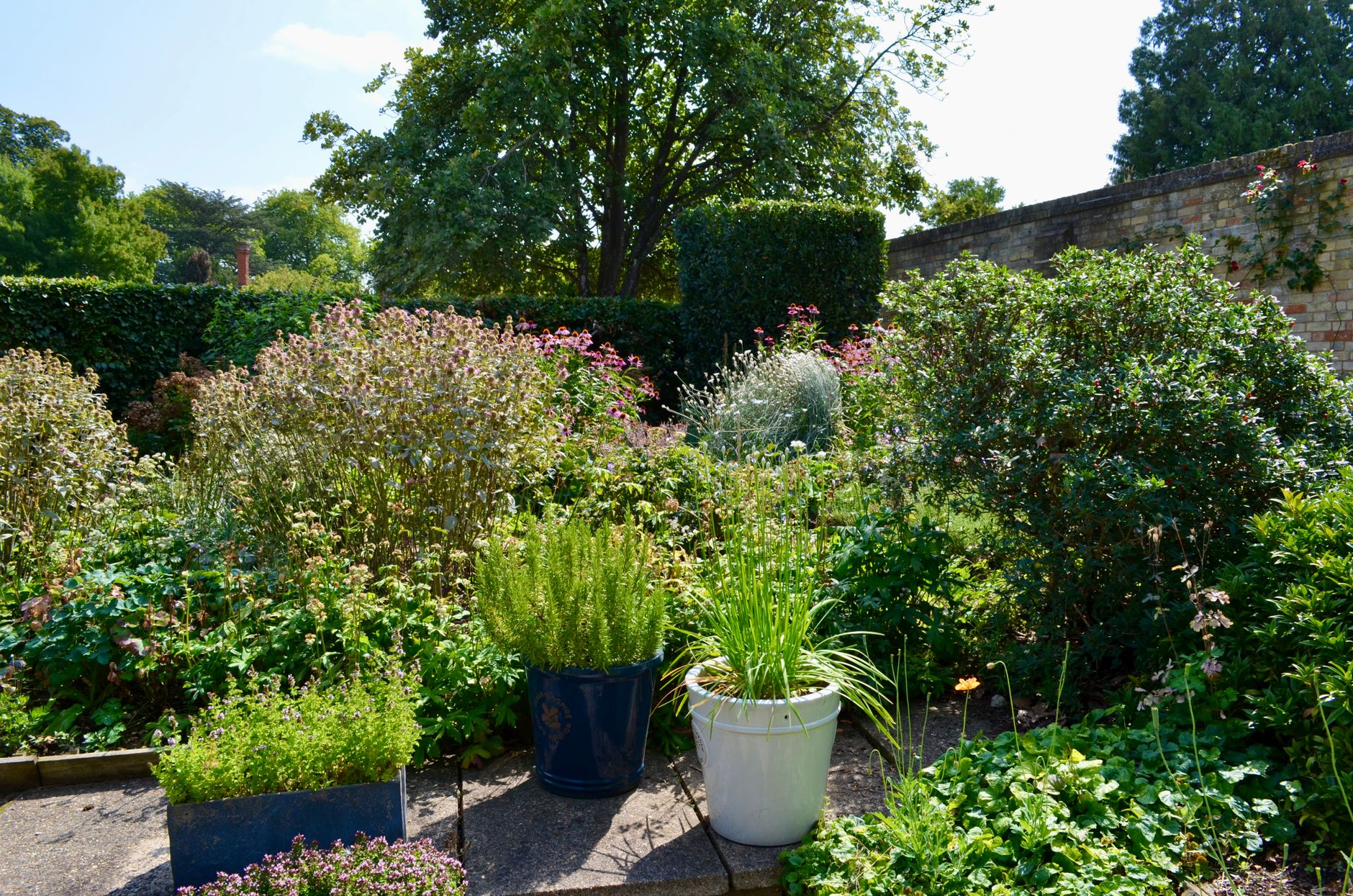
The gardens are the star. A series of walled rooms — the White Garden, Rose Garden, Wisteria Walk, Kitchen Garden and the famous Cherry Garden — flow one into the next around the surviving medieval towers. The Archbishop's Maze (1980, commemorating Robert Runcie) is the only major maze commissioned by an Archbishop of Canterbury. Inside the house, family rooms are open with volunteer stewards; downstairs the enormous Tudor donkey wheel that once drew water from a 200-foot well is fully intact and demonstrated. Walk the walled rooms as a loop from the courtyard arch rather than doubling back, and give them the full ninety minutes: the beds are planted for succession rather than one showpiece month, so something is in flower from the February bulbs to the last dahlias.
Four miles west of Henley-on-Thames, on the wooded Chiltern escarpment above the Thames. Twenty-five minutes from Reading via Sonning Common. National Trust members go free; non-members pay £13.50. Combine easily with a walk in the surrounding Warburg Nature Reserve or lunch in Henley (The Chequers, Rotherfield Peppard, is nearest). The tea room in the courtyard is small — arrive before or after the 12:30-13:30 crush. Dogs on leads welcome in the parkland. St Nicholas’ church at Rotherfield Greys, a mile south down lanes and field paths, holds the huge Knollys monument and costs nothing to enter; the Maltsters Arms stands beside it. Nuffield Place, another National Trust house, is six miles north near Nettlebed on limited opening days.
Tickets are handled at the gatehouse and the visit falls into four blocks. Start in the courtyard, where the surviving de Grey towers, the Tudor brick range, the Bachelors’ Hall and the old stable block stand in one uneven square — ten minutes of looking is enough to read the seams between 1347 and 1750. Cross to the Well House for the donkey wheel, a timber treadwheel turned by donkeys to raise water from 200 feet and in use into the early twentieth century; the volunteer stewards there will explain the whole mechanism if you ask, and it is the single best five minutes on site for children. Then the walled gardens, ninety minutes. The house comes last and takes forty-five: family rooms left roughly as the Brunners had them, 20th-century furniture and photographs rather than gilt and rope barriers. In winter, when the site shuts at 15:30, reverse that order and do the house first.
Driving is the honest answer: it is about eleven miles from central Reading and twenty-five to thirty minutes. Cross Caversham Bridge, climb Peppard Road (the B481) through Emmer Green, Sonning Common and Rotherfield Peppard, then follow the brown National Trust signs west onto single-track lanes with passing places — the last mile is genuinely narrow, so meet oncoming cars slowly. Postcode RG9 4PG gets you close; trust the brown signs over the sat nav for the final turn. Parking is free and included, on gravel, four or five minutes’ walk from the gatehouse. By rail, take the Reading train to Twyford (about 8 minutes) and change onto the Henley branch (about 13 minutes); an off-peak return runs around £8-£9, then it is roughly £15 by taxi each way. Book the return taxi before you set off — there is no rank and patchy signal.
One ticket covers everything: £13.50 for adults, £6.75 for children of five and over, under-fives free, and £33.75 for a family. There is no separate garden-only rate, no charge for the maze, the donkey wheel or the house, and no timed-slot supplement. Parking costs nothing. The desk also displays a slightly higher Gift Aid admission price; ask for the standard price if you would rather not add the donation. An essential companion accompanying a disabled visitor goes free. National Trust membership is around £90 a year for an adult, so roughly seven paid visits like this pays it back — or two visits here plus one big Thames-valley house. Extras are modest: tea, cake and soup in the courtyard, and Kitchen Garden surplus sold at cost. Cards are taken everywhere on site.
The site opens Wednesday to Sunday only and is shut every Monday and Tuesday, all year. Gardens open at 09:30, half an hour before the house, and the quiet window is 10:00 to 11:30 — after that the small car park fills, on summer Sundays by about 11:30, and the tea room queue peaks between 12:30 and 13:30. Month by month: February and March for bulbs, mid-May for the wisteria and tulips, June for the roses at full tilt, late summer for the Kitchen Garden at its most productive, and October for apples and colour. Avoid the first week of July, when Henley Royal Regatta clogs every approach road. November to February the site closes at 15:30, the walled gardens are bare sticks and full price buys you little unless you are a member — come for the house and the fire-lit interiors or not at all.
It suits gardeners, National Trust members and anyone with an unhurried half-day; grandparents and small children do well here, with the meadow, the maze and the donkey wheel doing the work. Teenagers get about forty minutes of genuine interest and then want lunch in Henley. There is no adventure playground and no adrenaline of any kind. On wheels, the courtyard and much of the walled garden are level but surfaced in gravel and mown grass with slopes between the garden rooms, and the upper floors of the house are reached by a narrow staircase — telephone the property before travelling if that matters. As a rainy-afternoon fallback it is weak, because the outdoors is the point and the interior is forty-five minutes: the River and Rowing Museum in Henley or Reading Museum are better wet-weather value. With an hour before a train, do not attempt it.
Manage two expectations. The Archbishop’s Maze is a flat brick-and-turf labyrinth with a single winding path and no dead ends, walked in ten minutes — it is a contemplative pavement, not a Hampton Court hedge maze, and children hoping to get lost will not. And there is no tower climb: the medieval towers are admired from the courtyard, not entered and ascended. Beyond that, the tea room seats far fewer people than the car park delivers, so a 13:00 arrival can mean a fifteen-minute queue and no free table; the gardens are strictly no-dogs, leads or not, with dogs confined to the parkland; and despite the Henley address the house sits high on the escarpment with no river frontage and no Thames view. Come for gardens and quiet layered history, arrive at opening, and the place delivers exactly what it promises.
Hours & entry
Free for National Trust members
Wed-Sun 10:00-17:00 (Mar-Oct) · Wed-Sun 10:00-15:30 (Nov-Feb) · Gardens open 30 min before house
What to see
{'what': "The Archbishop's Maze commemorating Robert Runcie", 'where': 'Beyond the Cherry Garden, west of the house'}
{'what': 'The Tudor donkey wheel that raised water from 200 feet', 'where': 'Well House, north side of the courtyard'}
{'what': 'The Wisteria Walk in mid-May', 'where': 'Between the Kitchen Garden and Rose Garden'}
Tips from the ground
Come mid-May for wisteria and tulips; June for roses; October for the walled kitchen garden apple pressing.
The Kitchen Garden sells surplus produce at cost — heritage apple varieties in autumn for pennies.
Park early on Sundays; the small car park fills by 11:30 in summer.
Questions, answered
Cost?
£13.50 adult, £6.75 child, £33.75 family. NT members free. Children under five go free, and one essential companion accompanying a disabled visitor is admitted free. That single ticket covers the house, all the walled gardens, the maze and the donkey wheel, and parking is included at no extra charge — there is no garden-only rate and nothing costs extra once you are through the gatehouse. The desk shows a slightly higher Gift Aid price alongside the standard one; you are free to ask for the standard price.
Free entry windows?
For National Trust members, always. Non-members full price. There are no free evenings, no free open days and no reduced twilight rate — the site simply shuts at 17:00, or 15:30 from November to February. If you expect to visit two or three Trust properties in the year, membership at around £90 for an adult beats paying at the gate; roughly seven adult visits here would cover it. Members do not need to pre-register and just show a card at the gatehouse.
How long?
Half a day — 90 min gardens, 45 min house, plus tea. Two hours is the sensible minimum and rushing below that wastes the ticket. Add twenty-five minutes each way if you walk down the lanes to St Nicholas’ church at Rotherfield Greys for the Knollys monument. In summer, arriving at the 09:30 garden opening gives you the walled rooms almost alone before the 11:30 car-park crunch; in winter, when everything closes at 15:30, arrive by 13:00 at the very latest.
Closed?
Every Monday and Tuesday all year. Fully closed 24-26 December. House and gardens keep the same closed days, so there is no Monday garden-only opening. Last admission to the house is shortly before site closing, which means 17:00 in the March-October season and 15:30 from November to February. High winds can close the parkland and occasionally the wooded approaches at short notice, and the tea room sometimes shuts before the gardens do, so check the National Trust page for Greys Court on the morning you travel.
Booking?
Not required. Walk-up ticketing at the gatehouse. There are no timed entry slots, no online-only discount and no need to reserve for the house tour, which is simply stewarded rooms you walk through. Cards are accepted at the gatehouse, tea room and shop. The only practical limit on a busy summer Sunday is the car park, which fills around 11:30 — arrive by 10:30 and the question never arises. Organised groups of fifteen or more should telephone the property in advance.
Reaching from Reading?
25-min drive north via Sonning Common and Rotherfield Peppard. Or train to Henley and a £15 taxi. By car it is about eleven miles: Caversham Bridge, the B481 Peppard Road, then brown National Trust signs onto narrow single-track lanes for the final mile. Parking on site is free. By rail, change at Twyford for the Henley branch, roughly twenty-five minutes in total for around £8-£9 off-peak return, then book a taxi both ways because there is no rank at the house. No bus stops within two miles.
Doing good is the business: every booking through Stay Reading funds one verified tonne of carbon removal — same room, same price, no markup.
Start your search