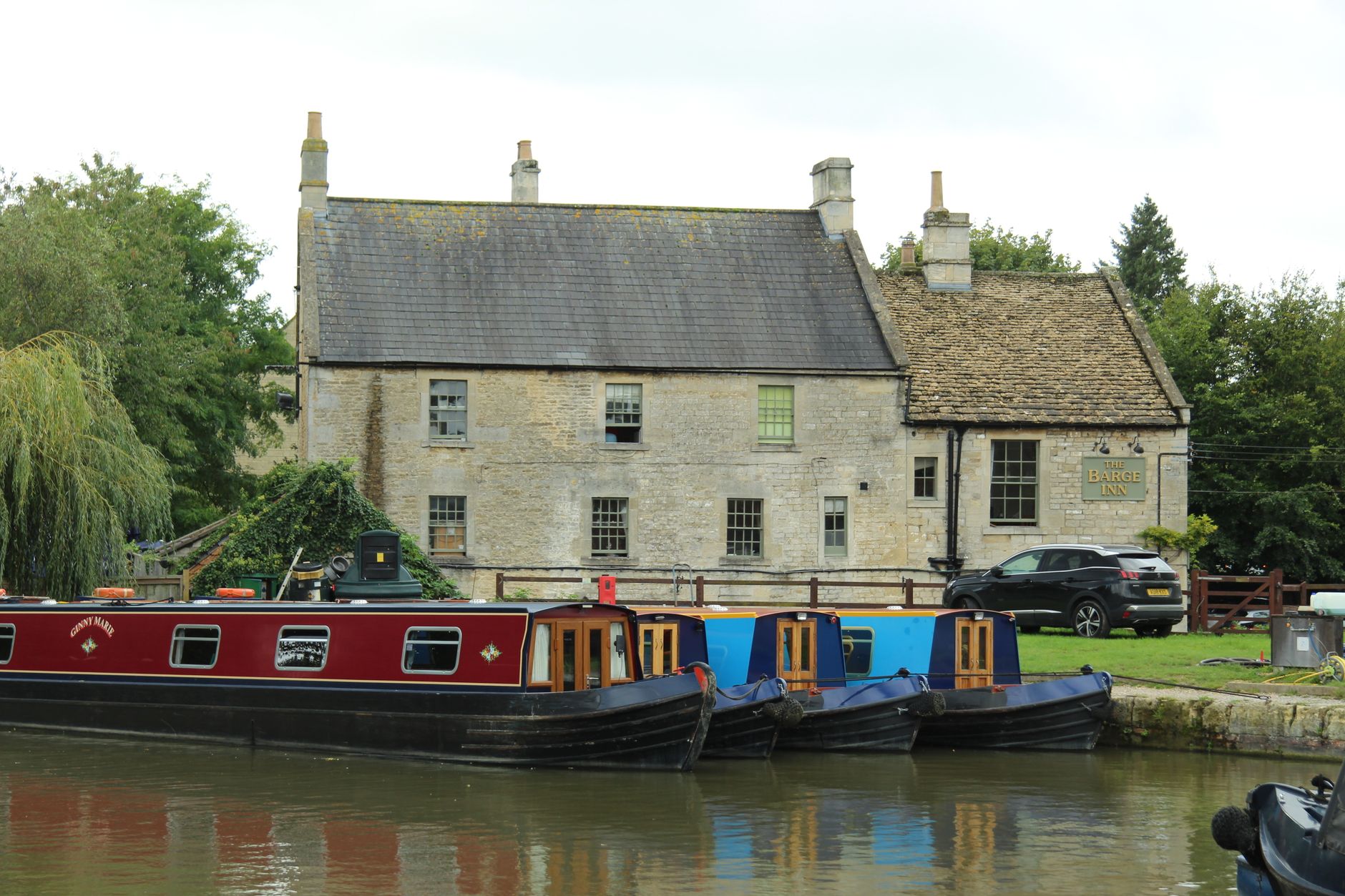
Days 1-2: the town itself
Anchor in Reading town centre — the Novotel on Friar Street or the Pentahotel on Oxford Road both run around £95-£111 a night for a week's booking. Use day one for the Abbey Quarter, Reading Museum, and Broad Street. Day two is Caversham: walk the Thames Path, lunch at the Baron Cadogan (Wetherspoon, £9 a plate), and paddle from Thames Rivercruise. Book Clay's Hyderabadi for one dinner and Pepe Sale for another — they're the two restaurants Reading locals actually recommend to visitors.
Reading Museum is free and worth two hours for the Bayeux Tapestry facsimile and the Silchester Roman collection; skip the paid audio guide, the free leaflet covers the same ground. The Abbey Ruins next door are a five-minute wander, not a half-day stop, so don't overbudget time there. For Broad Street, go after 5pm when the shopping crowd thins and the Oracle riverside terraces fill up instead — a pint at the Slug and Lettuce or the Botanist on the water is a better way to close day one than another shop. Caversham Bridge itself is a good orientation point: cross it once on day two and you'll use it without thinking for the rest of the week.
Days 3-4: day trips west and east
Day three: Oxford by train, 25 minutes from Reading station, £14 return off-peak. Do the Bodleian tour (£17), lunch at the covered market, back by 7pm. Day four: Windsor via the branch line from Reading, 30 minutes and £9 return. Windsor Castle entry is around £30 — book online to skip the queue. Eton is a free walk across the bridge and worth an hour.
Both trips run on Great Western services, so buy off-peak return tickets in advance through the National Rail app to save 20-30% over walk-up fares. In Oxford, skip the £25 hop-on-hop-off bus tour entirely — the city centre is walkable in under 40 minutes end to end, and the bus mostly repeats what you'll see on foot between the Bodleian and Christ Church Meadow. In Windsor, if the Castle fee feels steep, the free alternative is Windsor Great Park: enter near the statue at the end of the Long Walk and you get the same views of the castle towers for nothing, plus a proper stretch of legs after the train.
Day 5: Henley and the Thames
Henley-on-Thames is 20 minutes by train (£7 return). Walk the riverfront, do the River & Rowing Museum (£13), and lunch at the Angel on the Bridge — pub food on a terrace over the water, around £20. If it's July, Henley Royal Regatta transforms the town. Back to Reading by mid-afternoon and use the evening for the Botanist or a gig at Sub89.
Outside Regatta week (traditionally the first week of July), Henley is quiet enough to see in a single relaxed loop: station to riverfront to museum to lunch, done by 2pm. If you'd rather not double back to Reading, Henley itself has options for an overnight — the Relais Henley or Rioshouse Henley both sit close to the river and let you extend the day into a proper evening on the water instead of a rushed last train. Book Regatta-week accommodation at least two months out; rooms in town triple in price and vanish fast once the entries are announced in spring.
Days 6-7: slow days and festival grounds
Save day six for a slow morning, Reading Market at Bracknell (Wednesdays and Fridays) or the local farmers' market, and an afternoon at Prospect Park. Day seven: walk out to Richfield Avenue and the Reading Festival grounds — quiet outside August, but historically loaded (Nirvana played their last UK show here in 1992). Finish with dinner at Bhoj on Queen Victoria Street, one of the oldest curry houses in town, around £22 a head.
Prospect Park is a genuine local secret — 40 hectares of hillside above Caversham with views back over the Thames valley, and almost none of the tourist traffic that fills the town centre. Bring a picnic rather than relying on the small kiosk near the entrance, which keeps limited hours outside summer weekends. On day seven, the festival site itself is just open ground for eleven months of the year, so treat it as a 20-minute stop on the way to somewhere else rather than a destination — pair it with a walk along the river to Christchurch Meadows before heading in for the Bhoj dinner.
Where to stay for the full week
For a full week, location matters more than star rating. Staying inside the RG1 postcode near Reading station cuts every day trip's travel time, since all three (Oxford, Windsor, Henley) leave from the same platform. Premier Inn Reading Central and the Roseate Reading both sit within a 10-minute walk of the station and run roughly £90-£130 a night depending on the week. The Hilton Reading Hotel and Malmaison Reading are a notch up in price (£120-£160) but put you directly on the riverside path, which matters if you're walking to Caversham most mornings.
Budget travellers should look at Easyhotel Reading or ibis Reading Centre, both under £80 a night in most weeks, though rooms are compact and there's no restaurant on site — fine for a base you're only sleeping in. Avoid booking anything out near the motorway junctions (the M4-adjacent chains around Reading South) purely on price: they're £15-20 cheaper but add a bus or taxi to every single day of the itinerary, which erases the saving by day three. If Caversham's quieter streets appeal more than the town centre, the trade-off is a 10-15 minute bridge walk added to every outbound trip.
Getting around for the week
Reading is small enough to walk for days one, two, six and seven — the town centre to Caversham is about 20 minutes on foot. For the three day trips, everything runs from Reading station, a five-to-ten-minute walk or short bus ride from most central hotels. Reading Buses runs frequent local services (the Purple, Orange and Lilac lines cover most of the town and Caversham) for around £2 a single fare or £4.50 for a day ticket, which is worth buying if you're doing Prospect Park and the Oracle on the same day.
Skip renting a car for this itinerary entirely — parking in central Reading runs £3-5 an hour, and every destination in this guide (Oxford, Windsor, Henley, Prospect Park) is either walkable or a direct train ride. The one exception is Bisham Abbey or the countryside further out toward Marlow, which are easier with a car or a pre-booked taxi; leave those for a future trip rather than renting a vehicle just to see them once. Check National Rail for weekend engineering works before day three and day four specifically, since branch-line services to Oxford and Windsor are the ones most often affected by Sunday maintenance.
Money, weather and when to go
May to September gives the most out of this itinerary, since three of the seven days depend on being outdoors — Caversham's riverbank, Henley's terrace lunch, and Prospect Park's hillside. Winter Reading still works for days one and six (museum, market, curry houses) but Henley and the river paths are less rewarding in the cold, and the Angel on the Bridge terrace often closes its outdoor seating from November to March. If you're building the week around Henley Royal Regatta, aim for the first week of July and book both hotel and Oxford/Windsor train tickets a month ahead, since local trains sell out around the event.
All told, budget around £158 a day for a mid-range version of this trip: roughly £103 for the hotel, £40 for food across breakfast, lunch and dinner, and £15-16 for local transport and entry fees combined. The three day trips are the biggest swing factor — Windsor Castle's £30 entry alone is nearly double what you'll spend on the entire day in Henley. Cutting Windsor Castle in favour of the free Great Park walk, or trading one paid museum for a park afternoon, is the easiest way to bring the week in closer to £120 a day without losing any of the itinerary's structure.
Questions, answered
Is a week too long in Reading?
Not if you use it as a Thames Valley base. The town itself is 2-3 days; the rest of the week is day trips.
What's the best neighbourhood for a week-long stay?
RG1 near the station gives you walking access to the centre and fast trains everywhere else. Caversham is quieter but adds a bridge crossing to every trip.
How much should I budget?
About £158 a day for a mid-range trip: £103 hotel, £40 food, £16 transport and entries.
Are day trip trains reliable?
Great Western and the Elizabeth Line to Reading are generally reliable. Check for weekend engineering works on National Rail before you travel.
Do I need a car for this itinerary?
No. Every stop in this guide — the town centre, Prospect Park, Oxford, Windsor and Henley — is reachable on foot or by direct train from Reading station. A car only helps if you extend into the countryside around Marlow or Bisham, which isn't part of this week.
When should I avoid Henley?
Only avoid it if you dislike crowds during Henley Royal Regatta in early July, when hotel prices in the town triple. Outside that week, Henley is quiet and easy to see in a single afternoon from Reading.
Doing good is the business: every booking through Stay Reading funds one verified tonne of carbon removal — same room, same price, no markup.
Start your search