Museums and heritage
Reading Museum in the Town Hall is free — the full-size Bayeux Tapestry replica alone is worth an hour. Reading Abbey Ruins and Forbury Gardens: free, with signposted heritage trails and the Maiwand Lion statue. The Museum of English Rural Life (MERL) on Redlands Road is free and quietly one of the best small museums in the country — a genuine surprise for most visitors. Riverside Museum at Blake's Lock covers Reading's industrial waterway history, also free. Reading Museum opens Tuesday to Saturday, 10am to 4pm, and relies on a small donation box near the entrance rather than an admission charge. MERL, on the University of Reading's London Road campus, stays open until 5pm most days, runs free family trail sheets on weekends, and is closed on Mondays.
Reading Abbey, founded by Henry I in 1121, spent years behind hoardings before the ruins reopened to the public in 2018 after a multi-million-pound restoration — walking among the flint walls now costs nothing, though the paid guided tours through Reading Museum (roughly an hour, seasonal) go into the crypt and chapter house areas the free trail does not reach. St Laurence's Church, tucked against the Abbey gateway, is also free to step into for a quieter look at medieval Reading. Riverside Museum at Blake's Lock on Gasworks Road keeps limited hours — typically weekend afternoons between April and October — so check before making a special trip. The efficient order is Reading Museum and the Abbey Ruins together in the town centre, then MERL as a separate 20-minute walk south along London Road.
Walks and green space
The Thames Path from Caversham Bridge to Sonning is 4 miles one way — free, flat, and one of the best walks in the Thames Valley. Prospect Park, Palmer Park, and Caversham Court Gardens are all free public parks with views, wildlife, and cafes. View Island is a small wooded island accessible on foot from Caversham. Whiteknights Park (part of Reading University) is free to walk through and has a lake. Allow around two hours each way to Sonning at a steady pace, or turn back at Sonning Lock for a shorter round trip closer to 5 miles. Prospect Park in Tilehurst has one of the best skyline views over Reading from its summit, and Palmer Park in East Reading has free tennis courts and an athletics track open to casual joggers.
For something quieter, Fobney Island nature reserve, reached along the Kennet towpath south-west of the town centre, is free and good for spotting kingfishers, herons, and water voles without another walker in sight. The Kennet and Avon Canal towpath itself runs all the way from County Lock near the station out past Burghfield, flat and traffic-free the whole way, and forms part of National Cycle Network Route 4 if you would rather cover ground on a bike. Christchurch Meadows, just across the river from central Reading, is another free green space good for watching Reading Rowing Club crews train. For scenery, pick the Thames Path to Sonning; for wildlife, pick Fobney Island — both are free and start within 20 minutes' walk of the station.
Free events and window-shopping
Reading Central Library on King's Road has free wifi, warm indoor space, and rotating exhibitions. Reading Contemporary Art Space near the Oracle runs free shows. The Oracle riverside walk itself, without shopping, is a pleasant free stroll along the Kennet. In summer, Reading Council runs free outdoor cinema and music events at Forbury Gardens — check the council events calendar. Reading Festival soundchecks on Thursday afternoon are technically audible from public paths near Richfield Avenue. The library is open Monday to Saturday, roughly 9am to 7pm on weekdays and shorter on Saturdays, and its exhibitions change monthly, usually local photography or history displays with no ticket required.
RISC, the Reading International Solidarity Centre on London Street, is worth adding to the list: its ground-floor gallery and world garden are free to visit, even if you do not buy anything in the attached fair-trade café. South Street Arts Centre's foyer often has free exhibitions running alongside its ticketed theatre programme, so it is worth a look even on a night you are not seeing a show. Skip the idea of catching a full Reading Festival set for free from outside the site — you will hear muffled bass at best, and the soundchecks are the only genuinely audible part. For a proper free evening, pair the library or RISC with a Forbury Gardens screening on one of the council's advertised summer dates.
Markets, old streets and free churches
Reading Farmers' Market sets up on Broad Street on the first and third Saturday of the month, 9am to 2pm — browsing the stalls costs nothing even if you do not buy the cheese or the bread. Union Street, nicknamed Smelly Alley for its historic fishmongers and butchers, is one of the oldest shopping streets in Reading and worth walking even if you are not buying; several of its independent shops have traded there for generations. St Mary's Butts, next to the Minster, marks the original heart of medieval Reading and is easy to miss if you are only following signs to the Oracle.
St Mary the Virgin Minster, on St Mary's Butts, is Reading's oldest religious foundation and free to step inside outside of service times, with an interior far quieter than the shopping streets around it. None of this costs anything beyond the walking, and it fills the gap between the Abbey Ruins and the Oracle that a lot of visitors rush past. If you only have twenty minutes free between other plans, this pocket of the town centre — Smelly Alley to the Minster — is the best use of it.
University museums and free culture
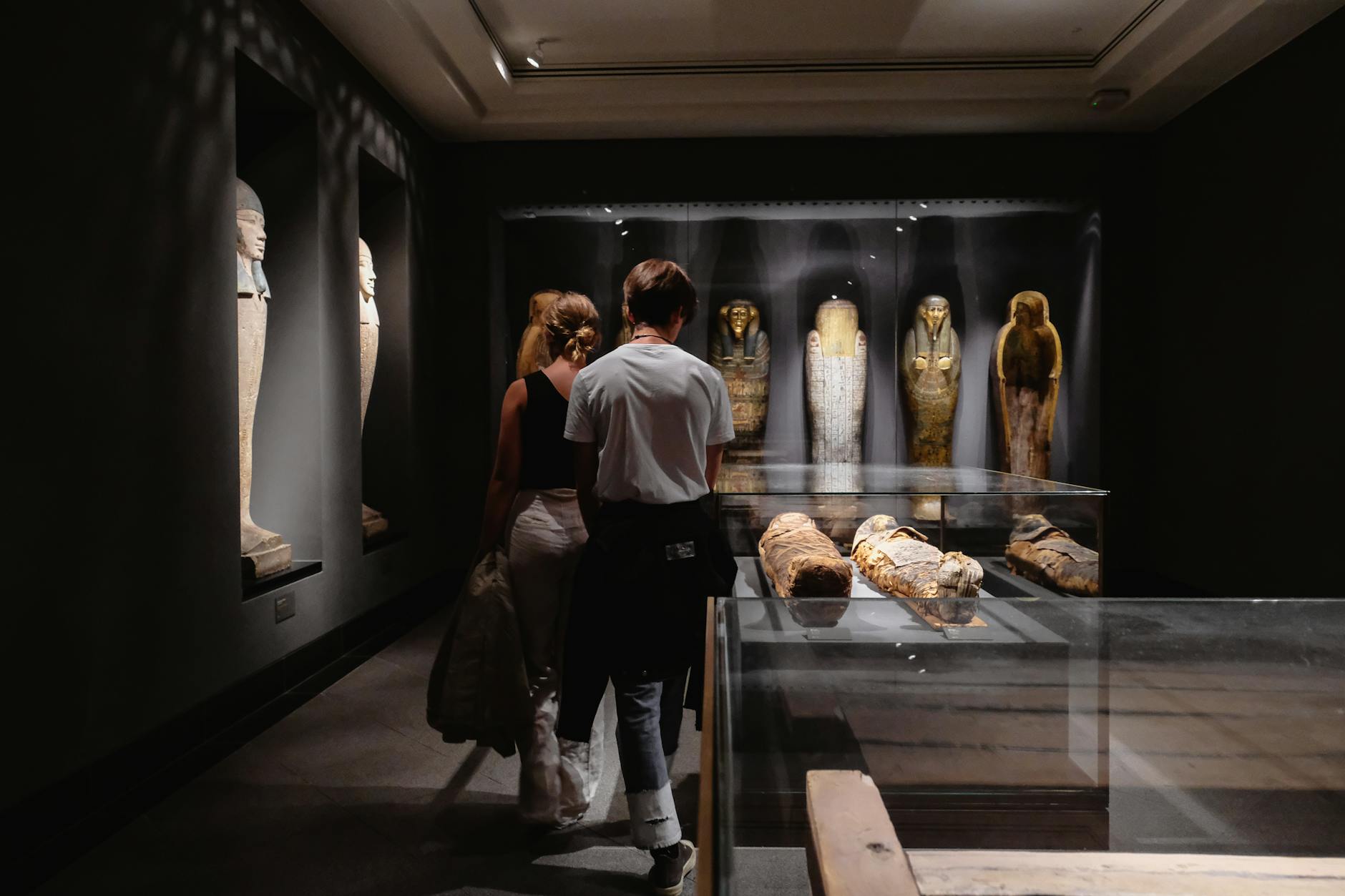
The Ure Museum of Greek Archaeology, inside the University of Reading's Edith Morley Building on the Whiteknights campus, is small but free, with a genuine collection of Greek and Cypriot antiquities that most visitors to Reading never hear about. It keeps university term-time opening hours, typically weekday afternoons, and is closed over the summer vacation and around exam periods, so it is worth checking the university's website before making the walk out. The University of Reading's Great Hall also hosts free lunchtime recitals during term, usually classical or choral, open to the public without a ticket.
Because the Ure Museum sits inside Whiteknights Park, it pairs naturally with the lake walk mentioned earlier — allow half a day if you want both without rushing either. This is genuinely a term-time-only plan: turning up in late July expecting the museum open is the most common mistake visitors make with it. If your trip falls in the summer break, stick to the park and the lake and save the museum for a return visit.
Planning a free day out
Most of Reading's free sights sit within a compact triangle: the station, the Abbey Quarter, and the river, none more than a 20-minute walk from the next. A sensible order is Reading Museum and the Abbey Ruins first thing, Smelly Alley and the Minster on the way to lunch, then the Thames Path or Christchurch Meadows in the afternoon while the light holds. Reading's town centre has free council wifi, and toilets are available in the Oracle and at the library without needing to buy anything.
Budget for lunch even on a free day — a sandwich from one of the independent shops on Union Street or a bench in Forbury Gardens keeps the day at zero beyond travel costs. If you are staying over, the Abbey Quarter and station area put you within easy walking distance of most of this list; central options in that stretch keep the whole itinerary on foot rather than needing bus fares. The one thing not worth doing is paying for a guided walking tour to see what this list covers for nothing — save that spend for the Abbey crypt tour, which is the one paid add-on that genuinely earns its ticket.
Questions, answered
Are Reading's museums really free?
Yes — Reading Museum, MERL, and Riverside Museum are all free with optional donations.
What's the best free thing to do with kids?
MERL for the interactive rural life exhibits, or Prospect Park for space to run and a free play area.
Is Reading Abbey open to visitors?
Yes, the Abbey Ruins are free and open daily. Guided tours (paid) run seasonally through Reading Museum.
Is there free wifi in Reading town centre?
Yes, Reading Council provides free wifi across the town centre, plus at the library, museum, and the Oracle.
How long do I need for a full free day in Reading?
Plan on six to seven hours to cover the Museum, Abbey Ruins, Smelly Alley, and a riverside walk without rushing. Add the Ure Museum only in term time, since it is shut over university holidays. Most of it is within a 20-minute walk of the station, so no bus fares are needed.
Can I do these free sights by bike?
Yes — the Kennet and Avon Canal towpath and much of the Thames Path form part of National Cycle Network Route 4, and both are flat and traffic-free. Fobney Island and Christchurch Meadows are both reachable this way. Town-centre sights like the Museum and Abbey Ruins are easier on foot given the narrow streets.
Doing good is the business: every booking through Stay Reading funds one verified tonne of carbon removal — same room, same price, no markup.
Start your search