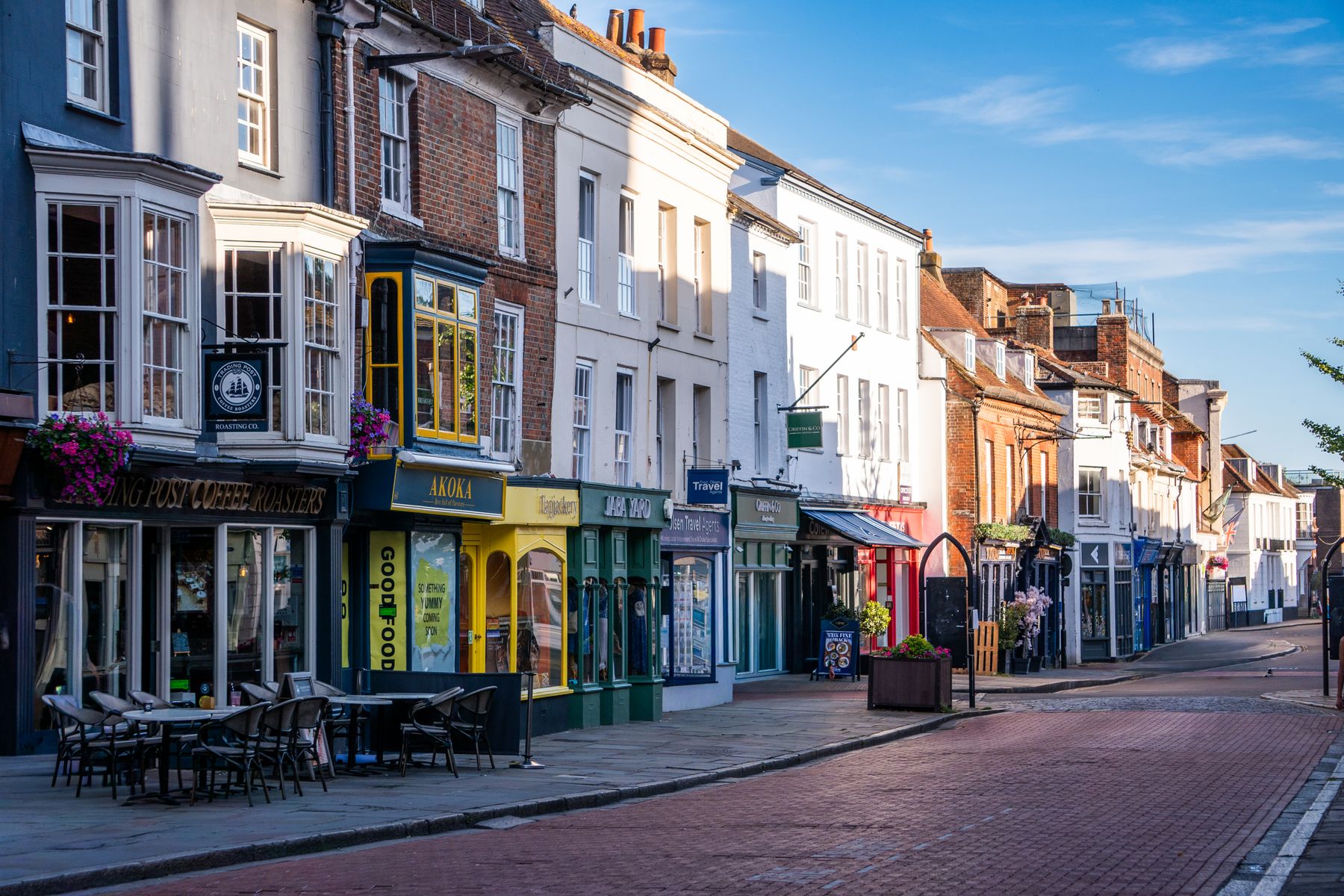
What to see in Reading UK: the centre on foot
Reading's centre is compact and best done on foot from Reading railway station, the western terminus of the Elizabeth line and a 25-minute train from London Paddington. Exit towards Station Road and you are five minutes from the Oracle, the shopping quarter built around the Kennet. Follow the riverbank west and you reach the Abbey Ruins, the surviving walls of a 12th-century abbey where Henry I is buried, and the adjoining Forbury Gardens with its Maiwand Lion memorial. Both are free and open daily; allow 45 minutes for the pair.
From Forbury Gardens, cross to King's Road and the Reading Museum in the old Town Hall, which holds the Bayeux Tapestry replica made in 1885 by Elizabeth Wardle and 35 women of the Leek Embroidery Society. It runs the full length of a gallery and is the single best indoor stop in town on a wet afternoon. Entry is free, though the museum closes on Mondays. Nearby, the 19th-century Reading Gaol wall on Forbury Road is an easy landmark to orient yourself by.
The Kennet, the Thames and the water meadows
The Kennet and Avon Canal meets the Thames just north-east of the centre, and the towpath between them is Reading's most pleasant walk. From the Oracle, head east along the Kennet through the remains of the Victorian Huntley & Palmers biscuit works, cross to the Thames at Blake's Lock, then follow the Thames Path towards Sonning. That stretch to Sonning Bridge is about 4 miles, flat and well-surfaced, passing the reading of the river at Caversham Lakes. It takes roughly 90 minutes at an easy pace.
For a shorter version, walk from Caversham Bridge to the Thames-side meadow at King's Meadow, a 15-minute stroll, and back through Christchurch Meadows. Summer weekends bring rowers and pleasure boats; May to September is the season to plan this. In winter, the towpaths flood in places after heavy rain, so check the Environment Agency's river levels before setting out and keep to the higher路 through Christchurch Meadows instead.
Nearby: day trips that fit a short stay
Reading works well as a base for the Chilterns and the Thames Valley. Henley-on-Thames is 9 miles north-west and about 20 minutes by car, or a slower rail trip via Twyford; the riverside walk to Marsh Lock and the Regatta course is the draw outside late June's rowing regatta. Basildon Park, a National Trust Palladian house 8 miles west near Pangbourne, takes a half-day and has spring bluebell woods. Pangbourne itself, on the Thames, is 15 minutes by train from Reading and good for a pub lunch.
Windsor is 25 miles east and reachable in about 35 minutes by train, changing at Slough, with Windsor Castle and the Long Walk. Oxford is 45 minutes by direct train and worth a full day. Skip the tourist-heavy Bicester Village unless you specifically want outlet shopping; it is an hour by car and adds little for a general visitor. For most travellers, I would book two nights in Reading, spend one full day on the centre and canal, and take one day trip to Henley or Windsor.
Where to stay and when to come
Hotels cluster in two places: around Station Road and Forbury Road, which puts the Elizabeth line, the Abbey Ruins and the Oracle within ten minutes' walk, and along the Thames in Caversham, which is quieter and better for the river but a 20-minute walk or short bus ride from the station. For a first visit I would choose the station side, purely for transport: every day trip and the London train start there. Reading's hotels fill for the Reading Festival in late August and for Royal Ascot week in June, so book well ahead then.
Late April to early June and September are the best months: mild, mostly dry, and quieter than high summer. July and August bring the warmest weather and the busiest riverside. Reading is a business town, so weekend rates are usually gentler than midweek, which suits leisure travellers. Bring a waterproof layer whatever the forecast; the Thames Valley catches showers that the coast misses. For a weekend, two nights is enough for the centre plus one day trip, and three nights lets you add Oxford or the Chilterns without rushing.
Related articles
Hotels in Reading
Questions, answered
How do I get from Reading station to the town centre?
Reading station exits onto Station Road, a five-minute walk from the Oracle and Broad Street. The Abbey Ruins and Forbury Gardens are ten minutes on foot via Forbury Road. Local buses leave from Station Road and Friar Street for Caversham and the suburbs.
Is Reading worth visiting for a weekend?
Yes, for a short break. The centre, Abbey Ruins, museum and canal walk fill a day, and Henley, Windsor, Pangbourne and Oxford are all under an hour away by train or car. Two nights covers the highlights comfortably without rushing.
What is free to see in Reading?
The Abbey Ruins, Forbury Gardens, the Kennet and Thames towpaths and the Maiwand Lion are all free. Reading Museum, including the Bayeux Tapestry replica, has free entry and closes on Mondays. Christchurch Meadows and King's Meadow are open public spaces.
How far is the Thames walk from Reading centre?
From the Oracle to Sonning Bridge along the Thames Path is about 4 miles, roughly 90 minutes at an easy pace. A shorter option is Caversham Bridge to King's Meadow, around 15 minutes each way, with flat, well-surfaced paths throughout.
When is the best time to visit Reading?
Late April to early June and September offer mild weather and fewer visitors. July and August are warmest and busiest on the river. Late August brings the Reading Festival, and June brings Royal Ascot nearby, so book accommodation early for those weeks.
Do I need a car in Reading?
Not for the centre or the Thames Valley. Trains reach Henley via Twyford, Pangbourne, Windsor via Slough, and Oxford directly. A car helps for Basildon Park and remoter Chilterns villages, though parking in central Reading is limited and paid.
Which nearby town should I pick for a day trip?
Henley-on-Thames for riverside walks, about 20 minutes by car, or Windsor for the castle and Long Walk, around 35 minutes by train via Slough. Oxford suits a full day. I would skip Bicester Village unless outlet shopping is the specific aim.
Where should I stay on a first visit to Reading?
The Station Road and Forbury Road area, for easy access to the Elizabeth line, the Abbey Ruins and the Oracle. Caversham suits those who want the river and quieter evenings, though it is a 20-minute walk or short bus ride from the station.
Doing good is the business: every booking through Stay Reading funds one verified tonne of carbon removal — same room, same price, no markup.
Start your search