The Riverside and Thames Path: Reading's Longest Colour Walk
Start at Reading Station and walk ten minutes south-west along the Kennet to the Oracle, then pick up the Thames Path at Blake's Lock. From there the towpath runs east past the Reading Rowing Club boathouse and on to Caversham Lock, roughly two and a half miles of level walking. Late October into mid-November is when the poplars and willows along the water turn, with the beech woods on the Caversham slope behind holding gold well into the month. Allow ninety minutes at an unhurried pace, and wear something that can handle the mud that collects between the lock and the weir after rain.
Cross Caversham Bridge and return through Christchurch Meadows, the broad grass triangle between the river and Caversham's residential streets. The horse chestnuts and limes here colour early, usually before the end of October, and the view back towards Reading's skyline is the best free photograph in town. The meadows hold up after wet weather far better than the Remenham side of the river, which floods. If you want one walk that shows a visitor the shape of Reading, this is the one I would book a hotel for: it starts and ends near the station and needs no car.
Prospect Park, Palmer Park and the Reading Suburbs
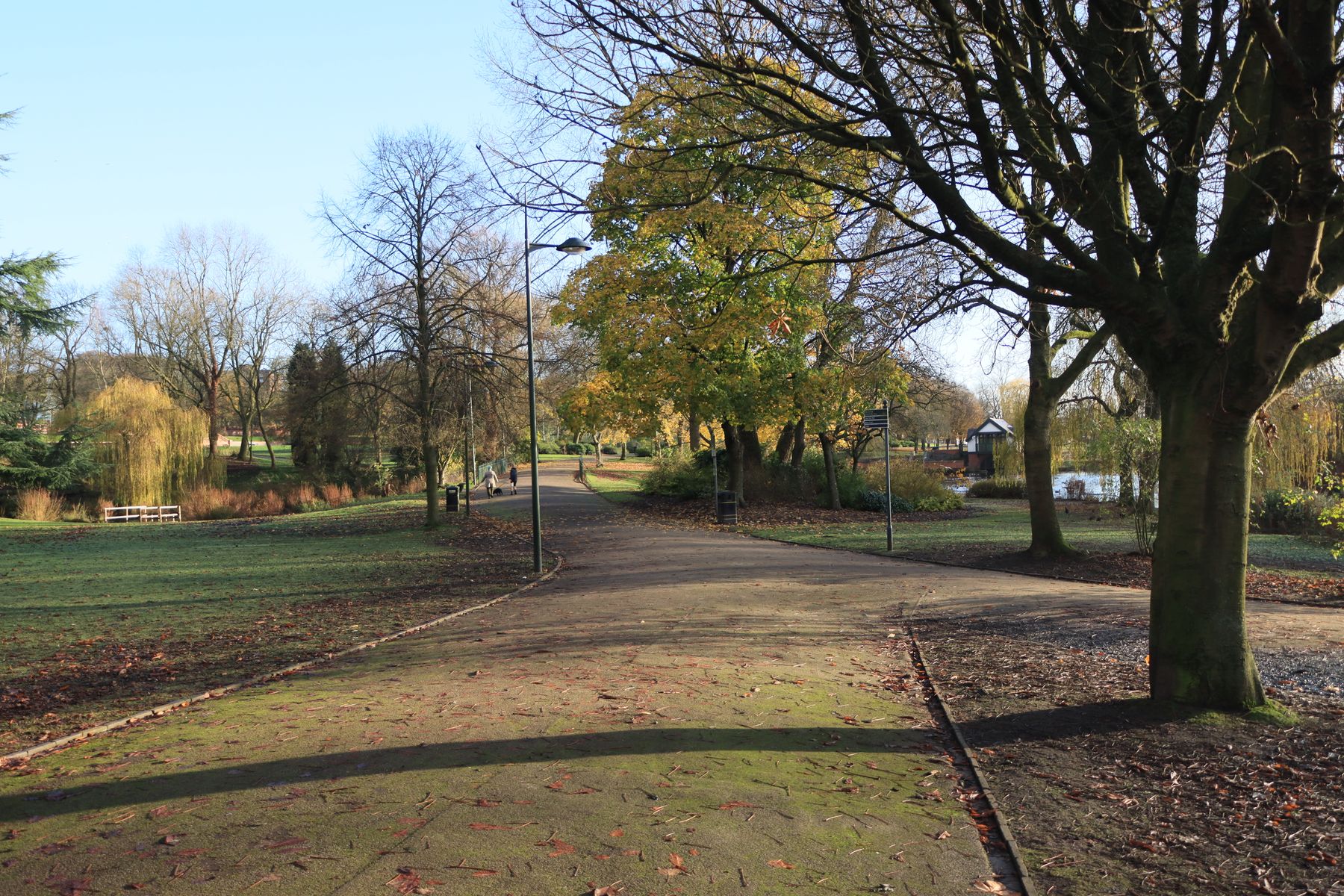
Prospect Park sits a mile and a half west of the town centre off the Bath Road, reached on foot in half an hour or by the number 1 bus in ten minutes. It is Reading's largest and oldest public park, laid out in the 1870s, and its lime avenue and mature oaks give a solid corridor of colour through November. The slope up to the park's high ground looks back over the town and out towards the Chilterns on a clear day. Paths are tarmac, so this is the walk to choose if someone in your party uses a wheelchair or a pushchair.
Palmer Park, out east between Wokingham Road and the Earley boundary, is quieter and more wooded, with a good belt of silver birch and cherry along its northern edge. It is a twenty-minute bus ride from the centre on routes along Wokingham Road. Neither park has a cafe worth planning around, so take a flask; the nearest decent coffee is on the Wokingham Road itself. Skip the Madejski Stadium perimeter paths in late autumn unless you are already going to a match, as there is little tree cover and the wind off the M4 is relentless.
Nature Reserves and Where the Colour Peaks Late
For the last colour of the year, head to the Thames Valley Park nature reserve east of the town, off the A329(M) near the Suttons Seeds roundabout. It is a twenty-minute drive from the centre, or a longer walk along the Thames Path through Sonning. The gravel-pit lakes are ringed with crack willow and alder, which keep a rusty tone into December longer than most of the town's street trees. Birdlife is good here in November, with wintering wildfowl on the water. Binoculars help but are not essential, and the paths are flat and mostly gravel.
Closer in, the old cemetery off Cemetery Junction and the mature trees around the Royal Berkshire Hospital's Wokingham Road frontage are an underrated fifteen-minute detour. For a longer half-day, the Dinton Pastures country park at Hurst is a short drive south of the borough boundary and worth the trip for its lakeside paths and heronry, though it sits outside Reading itself. Within town, the leaf fall in November is heavy enough that some towpath sections get slippery; walking shoes with grip matter more than a coat.
Timing, Weather and Where to Stay
Colour in Reading peaks later than in the Chilterns, typically from the third week of October to the second week of November, because the town sits low in the Thames valley and frosts arrive later. Rainfall is highest in November, so build in a flexible day and keep a shorter park walk as a fallback. Daylight fades by half past four, which matters if you are planning the Caversham stretch after lunch. Weekend mornings are quietest on the towpath; Sunday afternoons in Christchurch Meadows get busy with dog walkers and rowers.
For a two-night stay, I would book near Reading Station or in Caversham rather than out towards the motorway junctions. Station-side hotels put the Thames Path, the Oracle and the train to London within ten minutes' walk, and Caversham gives you the meadows on the doorstep with a short bridge walk into town. Reading's hotels fill quickly on weekdays with business travellers, so weekend rates are often the better value; book a fortnight ahead in October and November rather than leaving it to the last week.
Related articles
Hotels in Reading
Questions, answered
When is the best time to see autumn colour in Reading?
Mid-October to the second week of November. The riverside willows and poplars turn first, beech on the Caversham slope holds gold into mid-November, and the alder and willow at Thames Valley Park stay rusty into December. Frosts arrive later here than in the Chilterns.
Do I need a car to do these walks?
Not for the Thames Path, Christchurch Meadows or Prospect Park, all reachable on foot or by bus from Reading Station. A car helps for Thames Valley Park nature reserve and Dinton Pastures at Hurst, though both are also reachable by bus and a walk.
How long is the Thames Path walk from Reading to Caversham Lock?
About two and a half miles one way, level throughout, taking ninety minutes at an easy pace. Add the return through Christchurch Meadows and Caversham Bridge for a circular walk of roughly four miles, or allow an extra hour.
Which walks are suitable for wheelchairs and pushchairs?
Prospect Park has tarmac paths and a gentle slope, and the Thames Path between Blake's Lock and Caversham Lock is flat and wide. Christchurch Meadows is grass and can be soft after rain. Thames Valley Park's lakeside paths are flat gravel, generally fine in dry weather.
Is November a wet month in Reading?
It is one of the wetter months, and the towpath between the lock and the weir gets muddy. Pack shoes with grip, and keep a shorter park walk in reserve so a wet day does not derail the trip. Daylight goes by about half past four.
Where should I stay for a walking weekend in Reading?
Near Reading Station or in Caversham. Station-side hotels put the river, the Oracle and the London trains within ten minutes on foot; Caversham puts Christchurch Meadows on the doorstep. Weekends are often better value because weekday demand is business-led.
Are there cafes or toilets on these walks?
The Oracle and the streets around Reading Station have cafes and public toilets. Prospect Park and Palmer Park have neither worth planning around, so take a flask. The towpath has pubs at Caversham and Sonning but nothing directly on the Reading stretch.
How far ahead should I book a hotel in October or November?
A fortnight is usually enough, but Reading fills on weekday nights with business travellers, so a weekend booking made two to three weeks out gives the widest choice of rooms and the best rates. Half-term week is busiest.
Doing good is the business: every booking through Stay Reading funds one verified tonne of carbon removal — same room, same price, no markup.
Start your search