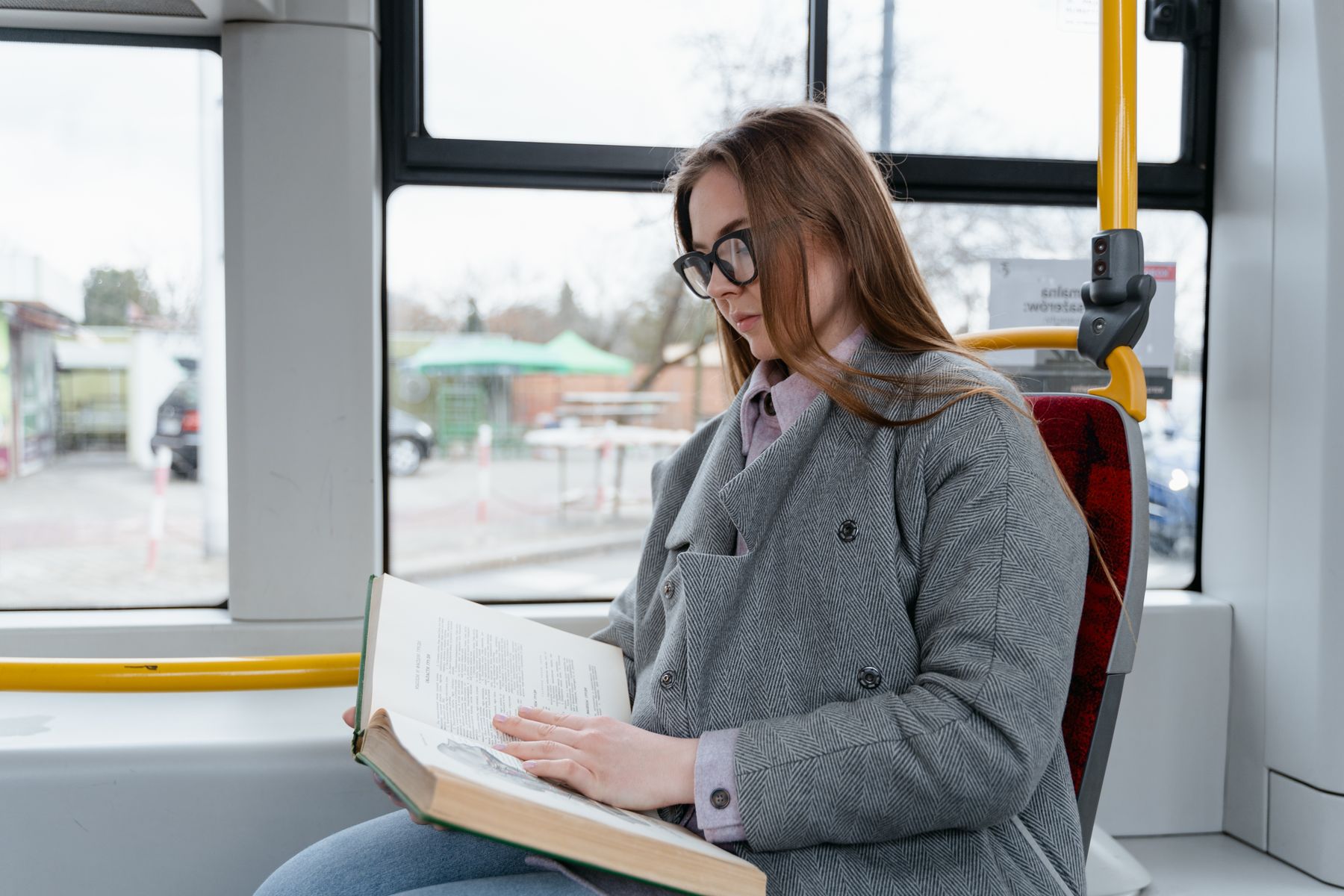
Routes through the town centre that cope with a pushchair
Reading Buses runs the town network, and the flat, frequent routes through the centre are the easiest with a buggy. The purple 17 and 18 link Reading station's north side with the Broad Street Mall and St Mary's Butts, stopping close to the Oracle's riverside entrance. Buses on these town corridors are typically high-floor-friendly with a dedicated buggy bay behind the driver, and the stops along Friar Street and Blagrave Street have level kerbs and shelters you can wait under in the rain.
For the Kennet Island and Whitley sides, the green 6 and 50 services run south from St Mary's Butts along the A33 corridors, useful if you are staying at a hotel near Junction 11 rather than in the centre. Reading's buses generally ask you to fold or park a buggy in the marked area and give priority to wheelchair users, so board early at quiet stops like Cheapside or the station forecourt rather than at the Oracle on a Saturday.
Out to Caversham, Tilehurst and the Thames Path
Caversham is the obvious buggy outing: the 23, 24 and 27 run over Caversham Bridge from Friar Street into Caversham precinct, where pavements are wide, the library has a lift, and Christchurch Meadows gives you a flat grass loop with a playground. From the precinct, the Thames Path west towards Mapledurham is mostly level gravel, though it narrows after Caversham Lock. Buses here are frequent on weekdays and roughly every 15 minutes on Saturdays; Sunday timetables thin out after mid-afternoon, so plan the return before 4pm.
Tilehurst, west of the centre along the Oxford Road, is served by the 15, 16 and 17; the buses drop on Norcot Road and School Road near the Meadway precinct. The slope up from the Oxford Road is real, so take the bus rather than walking with a pram uphill. Prospect Park has tarmac paths and a café, and the Number 33 to Turnhams Farm is a shorter hop. I would book a Caversham outing over Tilehurst with a toddler, because the river loop gives you a natural turning-back point.
Earley, Woodley and the A329 corridor
East of town, the 21, 21a and 14 run from Reading station and St Mary's Butts out along the Wokingham Road to Earley and Woodley. These are long, straight routes with stops at Cemetery Junction and the Three Tuns crossroads, and the lower Earley buses (the 21 and 21a) serve the University's Whiteknights campus, where the lake path is buggy-suitable and the cafés are used to families. Journey time from the station to Woodley precinct is about 25 minutes outside the peak.
The A329 corridor is where buses bunch in the school run, roughly 8am to 9am and 3pm to 4pm, so avoid it with a pushchair if you can. Woodley's precinct has level access and a small park behind the library. If you are staying near Thames Valley Park or the Madejski Stadium, the leopard 50 and the Mereoak park-and-ride give straightforward hops into the centre, though neither is a scenic ride.
Practicalities: tickets, kerbs and what to skip
Reading Buses uses tap-on, tap-off contactless and its own app; child fares and family day tickets exist, but check current prices at the time of travel rather than trusting a number from a blog. Buggy spaces are limited to one or two per bus, so at busy stops like the Oracle or Reading station in the commuter peak, let the first crowded bus go and take the next. Drivers generally lower the floor, but older buses on school routes may not, so keep the pushchair light.
What I would skip: the park-and-ride from Mereoak on a Saturday if you have a double buggy, because the shuttle fills up; and any attempt to take a pram on the narrow Victorian footpaths around the Oxford Road terraces in the wet. Best months for bus-and-walk days are May, June and September, when the Thames Path at Caversham is dry and the buses are not packed with school traffic.
Hotels in Reading
Questions, answered
Can you take a pushchair on Reading Buses?
Yes. Reading Buses carries one or two unfolded buggies in the marked bay behind the driver, with wheelchair users having priority. Fold if the bay is full or the driver asks, and board at quieter stops such as Cheapside rather than the Oracle on Saturdays.
Which Reading bus is easiest for a trip to Caversham with a pram?
The 23, 24 and 27 from Friar Street over Caversham Bridge to Caversham precinct. The precinct is flat, the library has a lift, and Christchurch Meadows gives you a level riverside loop with a playground. Return before mid-afternoon on Sundays when timetables thin out.
How long is the bus from Reading station to Woodley?
About 25 minutes outside peak times on the 21 and 21a along the Wokingham Road, with stops at Cemetery Junction and the Three Tuns. Allow longer between 8am and 9am and 3pm and 4pm, when school traffic bunches buses along the A329.
Where can I stay in Reading with a buggy and easy bus access?
Hotels near Reading station and Friar Street put you on the flat, frequent town routes, while properties around Junction 11 and Kennet Island suit the green 6 and 50. Central stays avoid the Oxford Road slopes and give you level kerbs to the Oracle.
Are Reading bus stops suitable for prams?
Most central stops on Friar Street, Blagrave Street and St Mary's Butts have level kerbs and shelters. Outlying stops on the Oxford Road and Wokingham Road vary, and some lack a raised kerb, so be ready to lift the front wheels when boarding.
What are the best months for a buggy day out in Reading?
May, June and September. The Thames Path at Caversham is usually dry underfoot, playgrounds are open, and buses are quieter than in the school-run months of March and November. July and August are warm but the riverside gets busy at weekends.
Is the Thames Path from Caversham suitable for a pushchair?
Yes as far as Mapledurham. From Caversham precinct the path west is mostly level gravel, narrowing after Caversham Lock, so a sturdy pushchair or carrier works better than a light stroller beyond that point. The Christchurch Meadows loop is tarmac and simplest.
What should I skip with a pram in Reading?
The Mereoak park-and-ride shuttle on Saturdays with a double buggy, since it fills quickly, and the narrow terraced footpaths off the Oxford Road in wet weather. Also avoid boarding at the Oracle in the commuter peak if you need the buggy bay.
Doing good is the business: every booking through Stay Reading funds one verified tonne of carbon removal — same room, same price, no markup.
Start your search